|
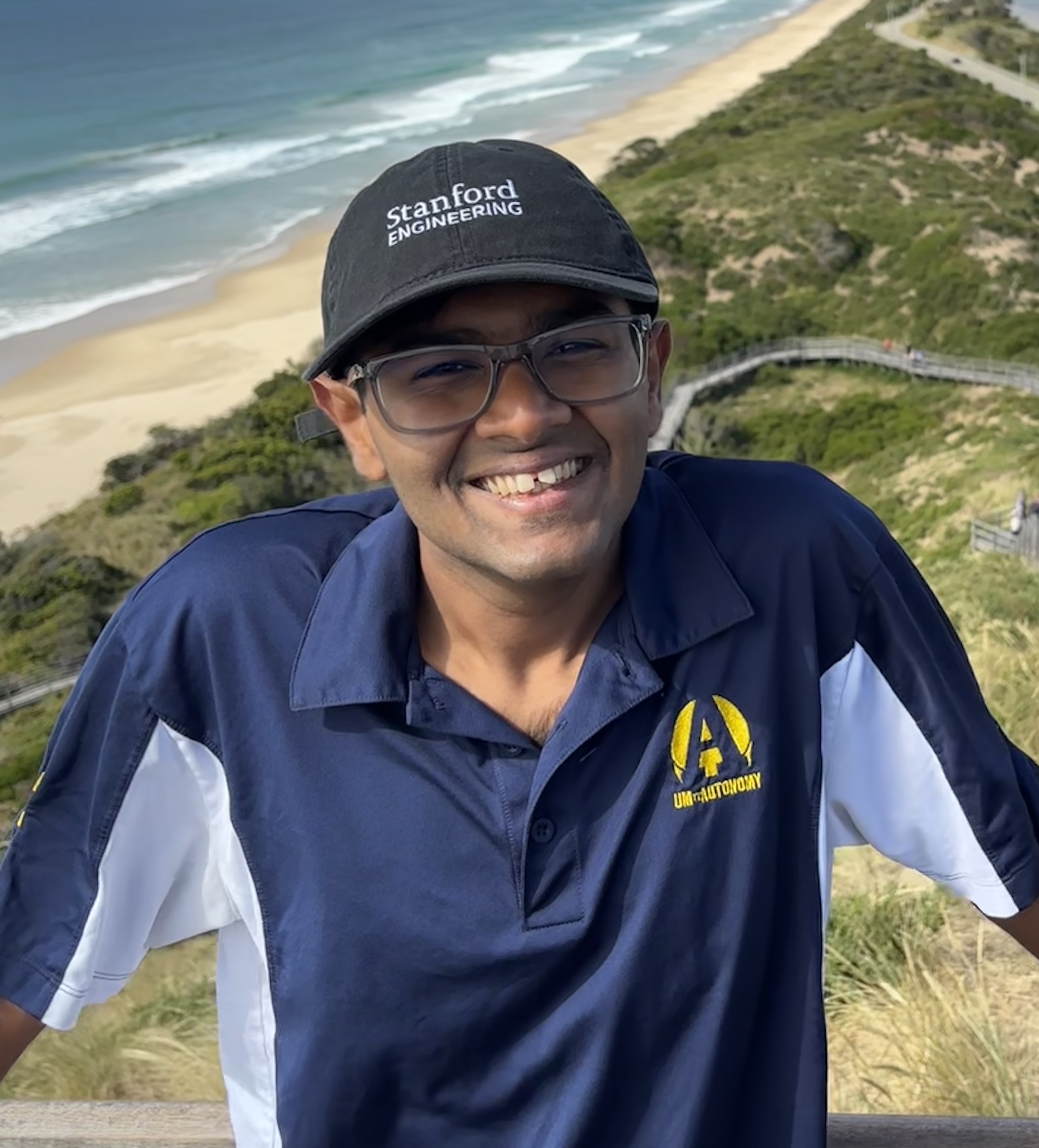
I am an alumnus of the MS CS program at Stanford University where I worked in computer vision. I currently work on machine learning for humanoid robotics at Tesla Optimus. At Stanford, I worked with Jiajun Wu and Leonidas Guibas. I completed my undergraduate studies at the University of Michigan, where I was advised by David Fouhey. Prior to Tesla, I worked at Apple, developing machine learning algorithms for real-time gaze tracking in AR/VR systems. Earlier in my career, I worked with Amy Cohn, Albert Berahas, and Stephen Parker at Michigan on research spanning healthcare operations, adaptive optimization, and bioinformatics. Email / CV / Google Scholar / Github |
|
|
I am interested in developing robust computer vision systems that can understand the world around us. Some areas of particular interest include scene understanding, learning robust visual representations and models using unstructured visual data, and neural rendering. |
 |
Zhengfei Kuang*, Yunzhi Zhang*, Hong-Xing Yu, Samir Agarwala, Shangzhe Wu, Jiajun Wu NeurIPS (Datasets and Benchmarks), 2023 project page / arXiv A novel real-world object inverse rendering benchmark to evaluate inverse rendering methods. |
|
|
Hong-Xing Yu, Samir Agarwala, Charles Herrmann, Richard Szeliski, Noah Snavely, Jiajun Wu, Deqing Sun CVPR, 2023 project page / arXiv Specular objects such as coke cans often appear "accidentally" in images and can be used to recover scene lighting from single image observations using differentiable rendering. |
|
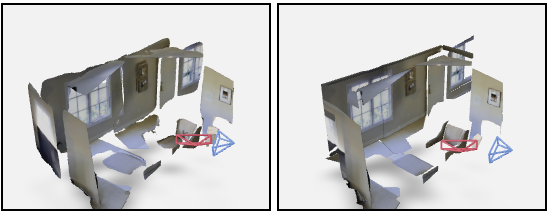
Samir Agarwala, Linyi Jin, Chris Rockwell, David F. Fouhey ECCV, 2022 project page / arXiv Transformers are really good at integrating evidence across multiple views and producing a planar reconstruction. |
|
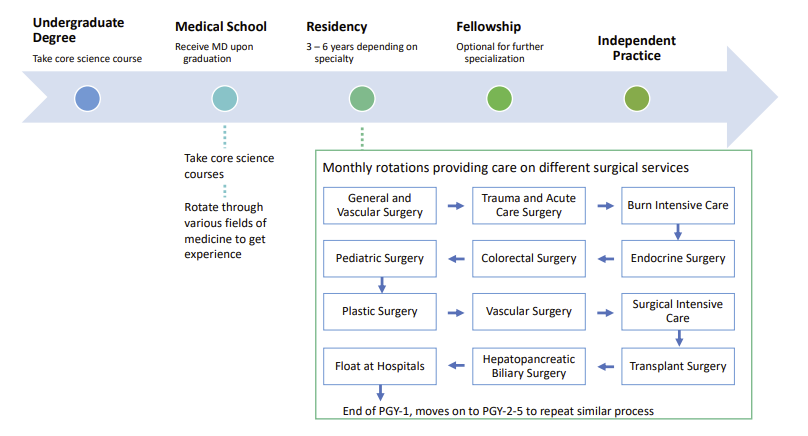
Fumiya Abe-Nornes, Samir Agarwala, Nathan Smith, Rachel Zhang, Amy Cohn, Angela Thelen, Rishindra Reddy, Brian George WSC, 2022 Paper Real-life variation in learning speeds of surgical trainees and decrease in available training opportunities can affect trainee competency and potentially endager patient safety. |
|
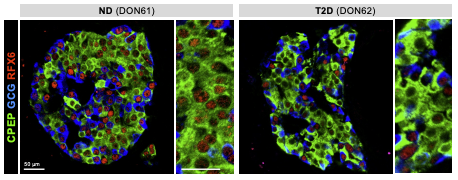
JT Walker*, DC Saunders*, V Rai*, C Dai, P Orchard, AL Hopkirk, CV Reihsmann, Y Tao, S Fan, S Shrestha, A Varshney, JJ Wright, YD Pettway, C Ventresca, Samir Agarwala, R Aramandla, G Poffenberger, R Jenkins, NJ Hart, DL Greiner, LD Shultz, R Bottino, Human Pancreas Analysis Program, J Liu, SCJ Parker†, AC Powers†, M Brissova† bioRxiv, 2021 bioRxiv Identifying early disease-driving events of type 2 diabetes through integrative analysis of diverse modalities. |
|
Website based on Jon Barron's website |